Product notes · 18 illustrated contrasts
Global products need more than one point of view
In an AI-native, low-attention economy, the perspective outside our usual product circle may be the one we need most.
Bhasker Kode ·
18 images · Click a thumbnail to view it larger · ← → to browse
Simpler, less controversial ones
1 / 18 · Trust changes with the audience and the boundary
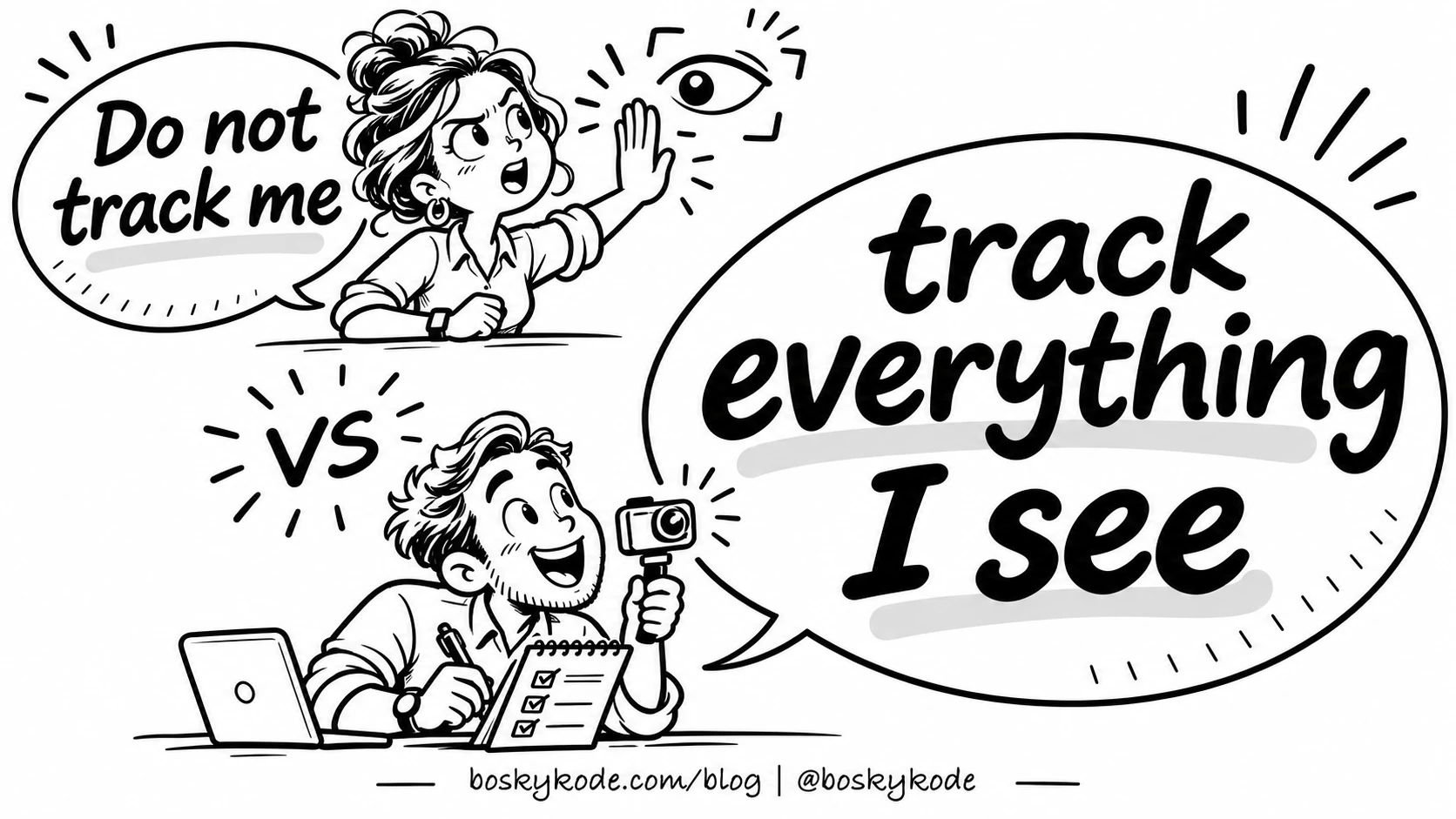
Do not track me. Remember what I saw.
Someone can reject invisible surveillance and still want a reliable memory of an article, a purchase, or a conversation. The difference is purpose and control: who records the activity, who benefits, and whether it can be erased. An AI assistant that remembers should make those choices understandable at the moment memory becomes useful.
We are building in an economy where a product may get only a glimpse before someone moves on. I think that makes perspective more valuable. When AI can produce another interface, explanation, or recommendation, the harder question is which choices deserve a person's attention in the first place.
Global products need a glimpse of contrarian mindsets and different schools of thought. One place to look is the developing world: what changes when we design around a shared phone, several languages, an uneven connection, or a purchase that must justify itself quickly? Those are questions to investigate in specific communities, not a single description of billions of people. Teams in emerging markets can look outward in the same spirit. Learning should travel in both directions.
Generations offer another lens. Gen Z is followed by Generation Alpha and the newer label Generation Beta—the Greek letters I had in mind. McCrindle uses Alpha for 2010–2024 births and Beta for 2025–2039. Those labels give us names for a conversation, not a reliable prediction of someone's choices. Pew's caution about generational boundaries is useful here: they are not precise or universally agreed on. Beta is a label for a cohort still being born, not a customer persona we already understand.
The more useful questions cross those labels. What choices has someone grown up with? What do they trust? What can they afford to try, and what do they want to stop thinking about? An AI-native product may feel like freedom to one person and another decision to manage for someone else.
These eighteen contrasts are a way to hold those possibilities together. The bigger right-hand bubble is the punchline, not a verdict. Neither side belongs to a particular country, gender, or generation. The same person can move between them over the course of a day.
Perspective 01
A useful product still needs an audience
Start with the gap between what we can make and what someone wants enough to choose.
Building is tough. Selling is tough.
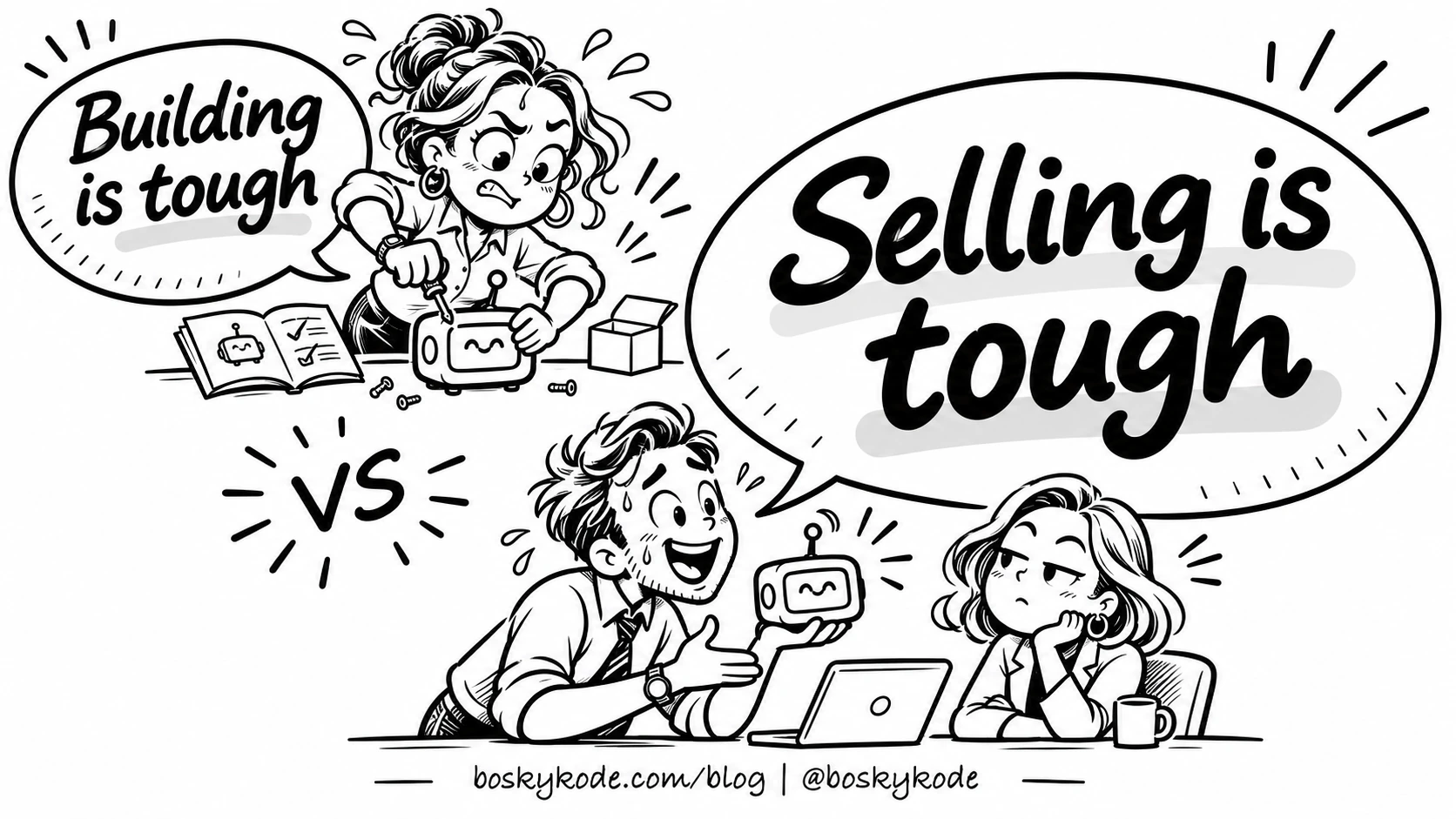
Building makes the problem concrete: an interface, a working demo, something we can fix. Selling asks a different question: why should someone change what they already do? A team can be excellent at the first and inexperienced at the second. Watching how people explain value in another market can reveal more than another feature comparison.
Build and they will come. Who is already listening?
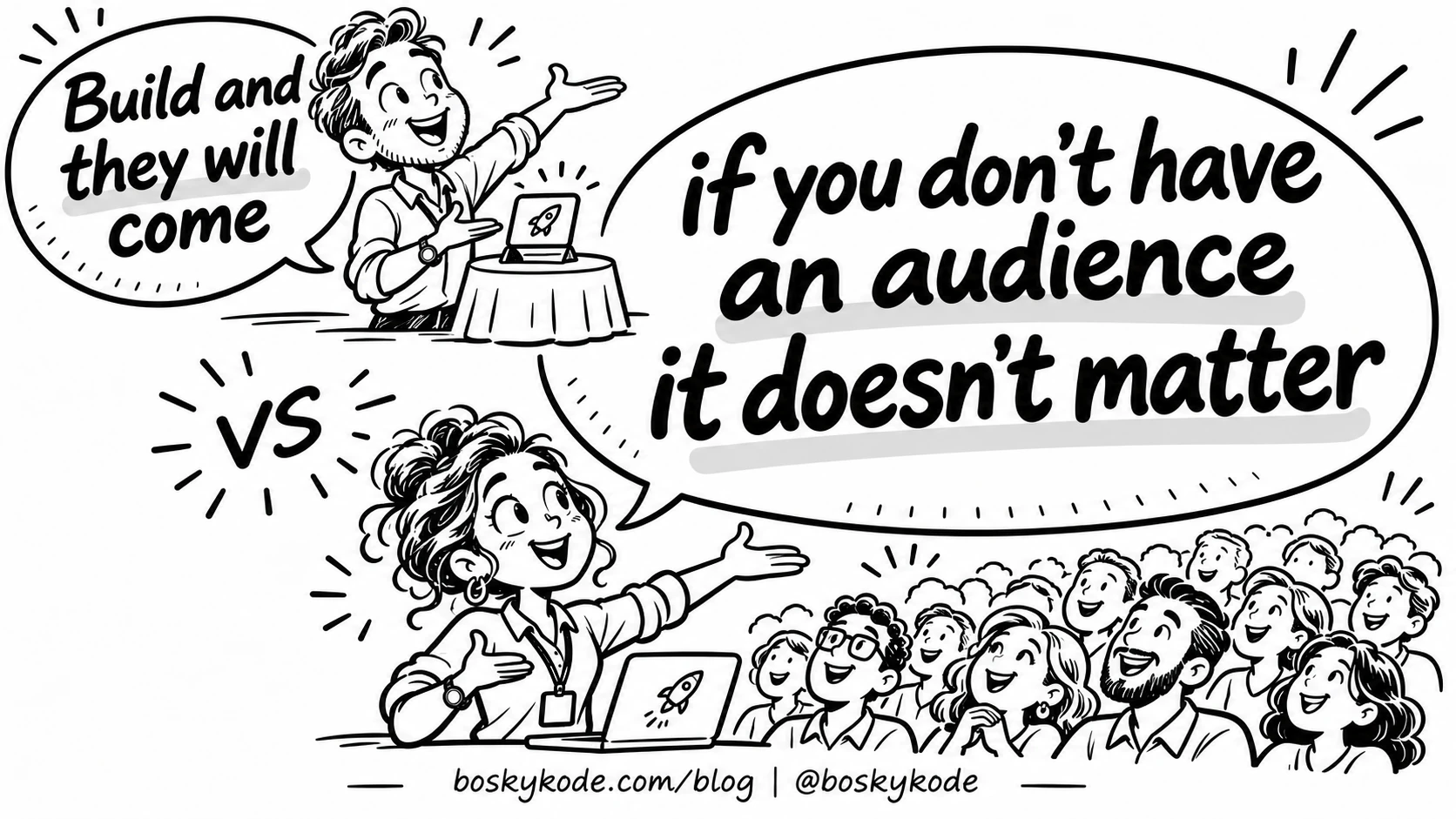
An audience is a relationship before it is a distribution channel. A product may travel through a creator, a local shop, a professional group, or a family recommendation rather than a launch feed. For a global product, discovering those routes belongs in the product work itself. The place people encounter an idea changes what they expect from it.
Good because it is useful. Good because others use it.
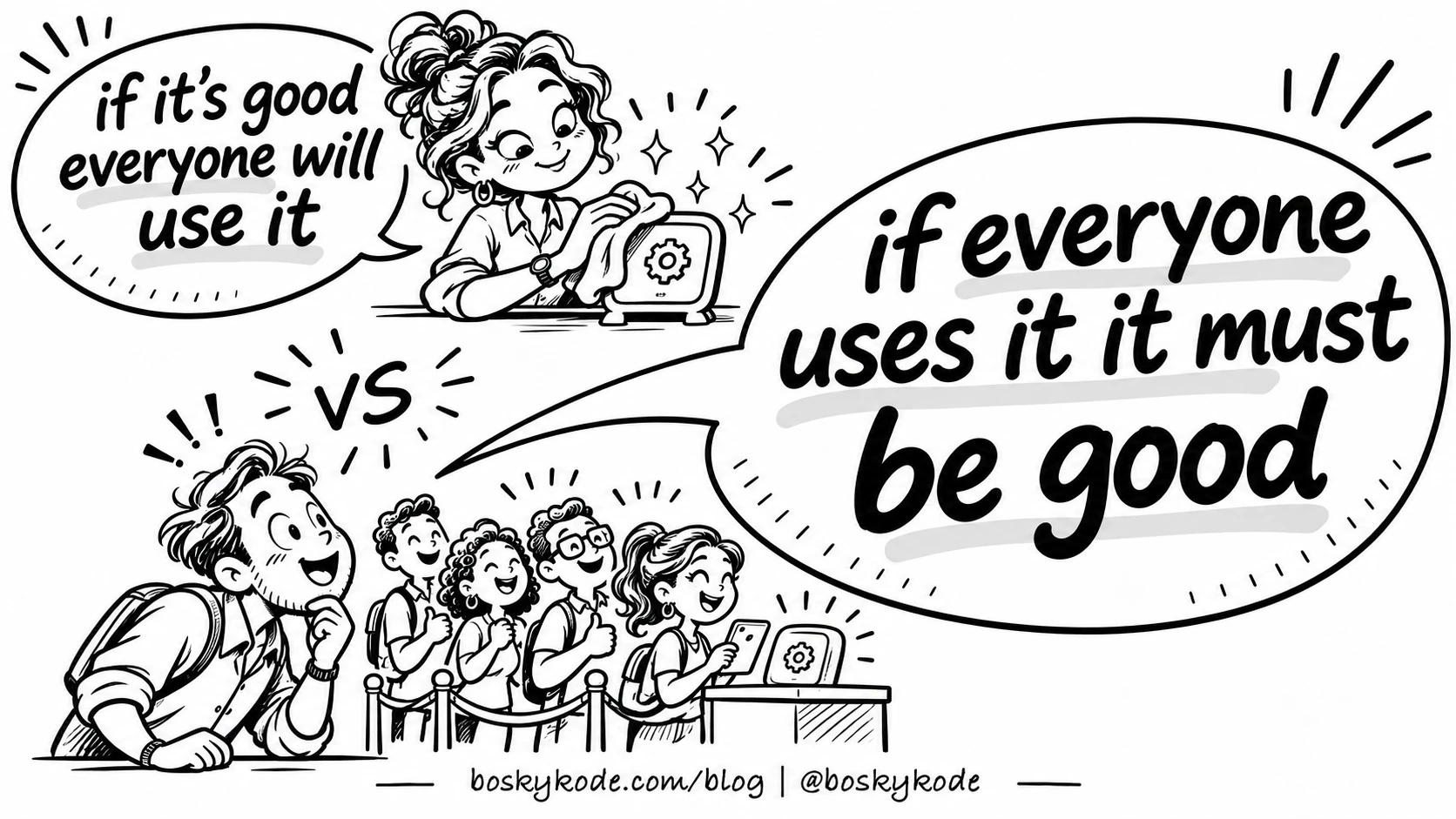
One person wants proof that a product works; another wants proof that their people are already there. A collaboration tool becomes more useful with colleagues, while a personal utility might be valuable in complete isolation. Before treating adoption as a quality signal, ask whether the crowd creates the value or merely makes the decision feel safer.
Save money. Make money.
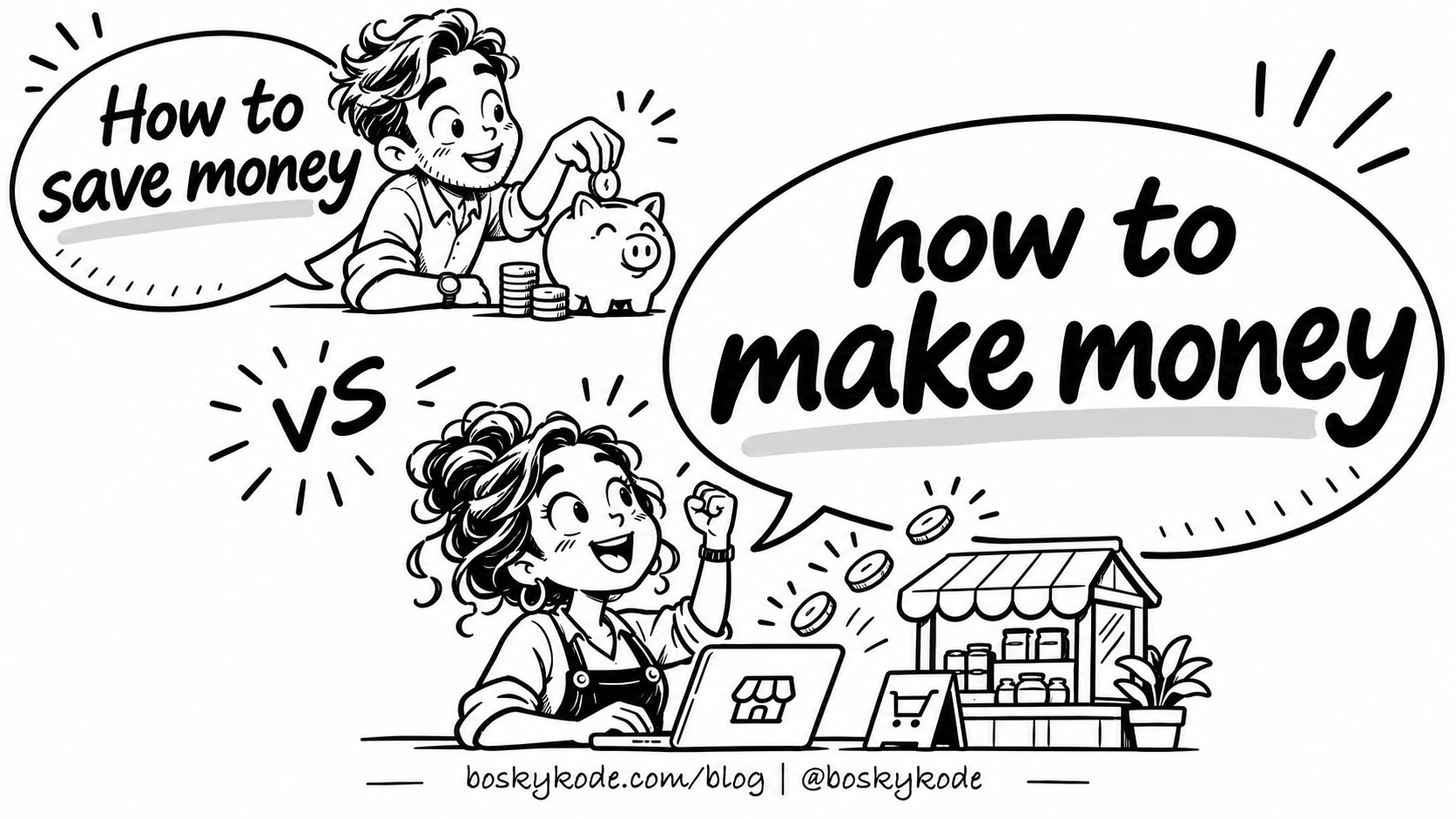
A subscription can be a convenience expense, a cost to avoid, or a tool someone expects to earn with. Those are different buying decisions, even when the interface is identical. A useful pricing conversation asks what the purchase must make possible. It also leaves room for cash flow, uncertainty, and the time before any benefit arrives.
Perspective 02
Trust changes with the audience and the boundary
Privacy and participation can both matter to the same person. The context decides which one comes first.
Keep it in the family. Share it beyond the family.
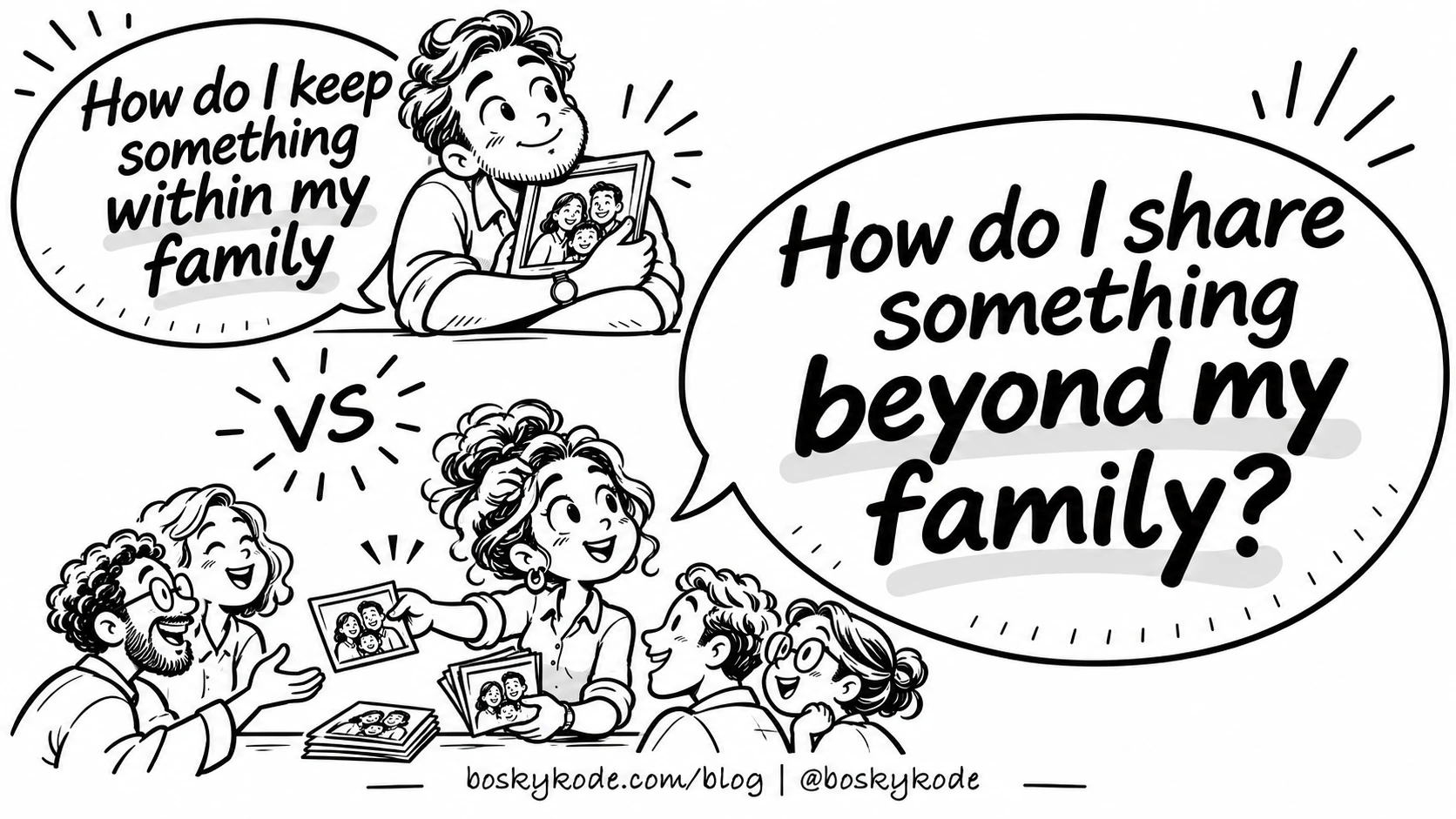
A family photo can be a private memory and an invitation to connect. The important product question is who belongs inside each circle, and who gets to decide. Shared devices, extended families, and changing relationships are useful design situations to investigate across markets. A single public-or-private switch rarely describes all the boundaries someone has in mind.
Do not track me. Remember what I saw.
Someone can reject invisible surveillance and still want a reliable memory of an article, a purchase, or a conversation. The difference is purpose and control: who records the activity, who benefits, and whether it can be erased. An AI assistant that remembers should make those choices understandable at the moment memory becomes useful.
Private inbox. Public conversation.
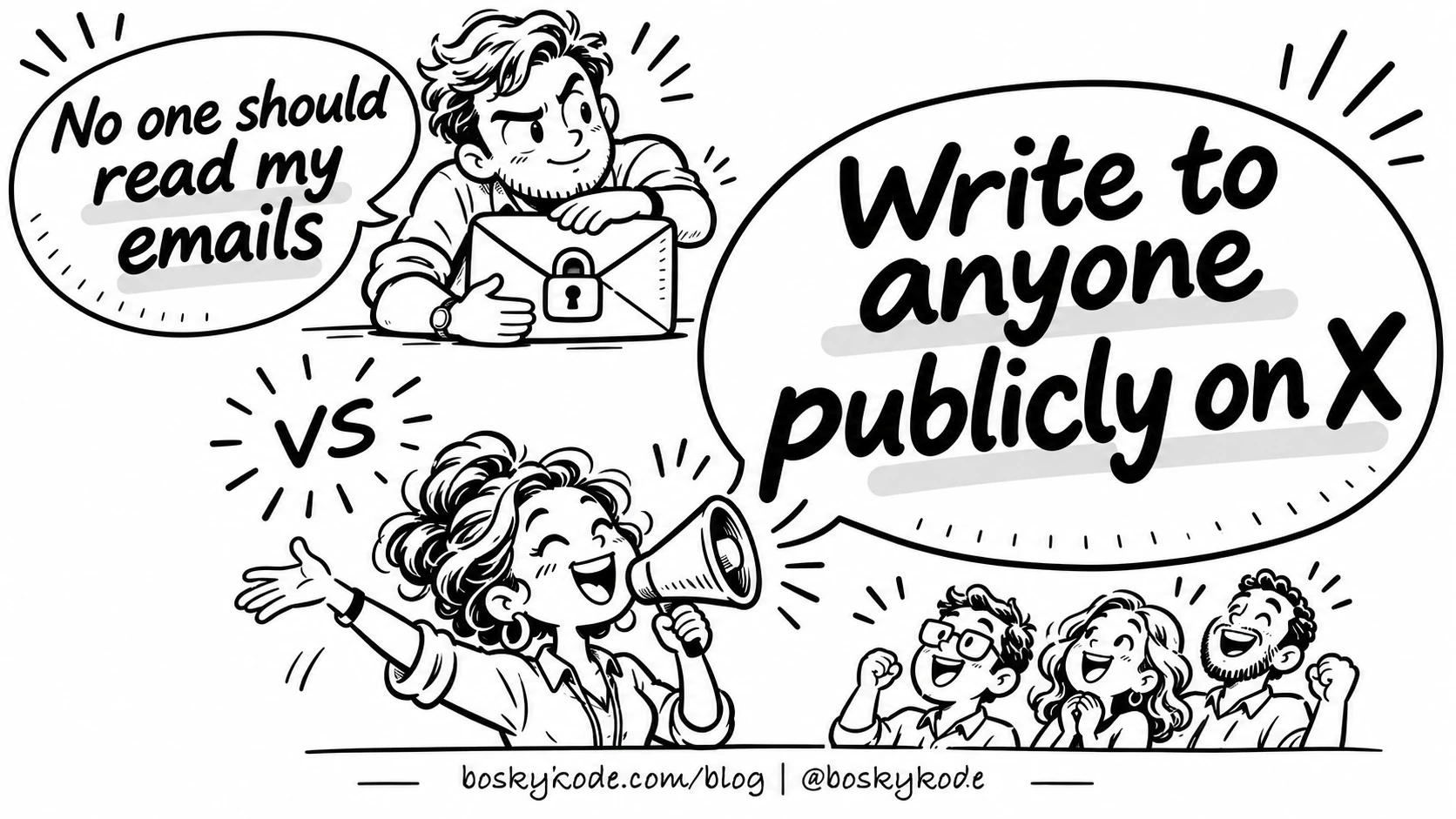
Keeping email private and writing publicly on X are compatible choices. One is a bounded conversation; the other can be a way to find people, help, or opportunity. Products should respect the audience someone chose for a particular message. Visibility in one setting does not grant permission to expose everything else.
Protect the connection. Become the intermediary.
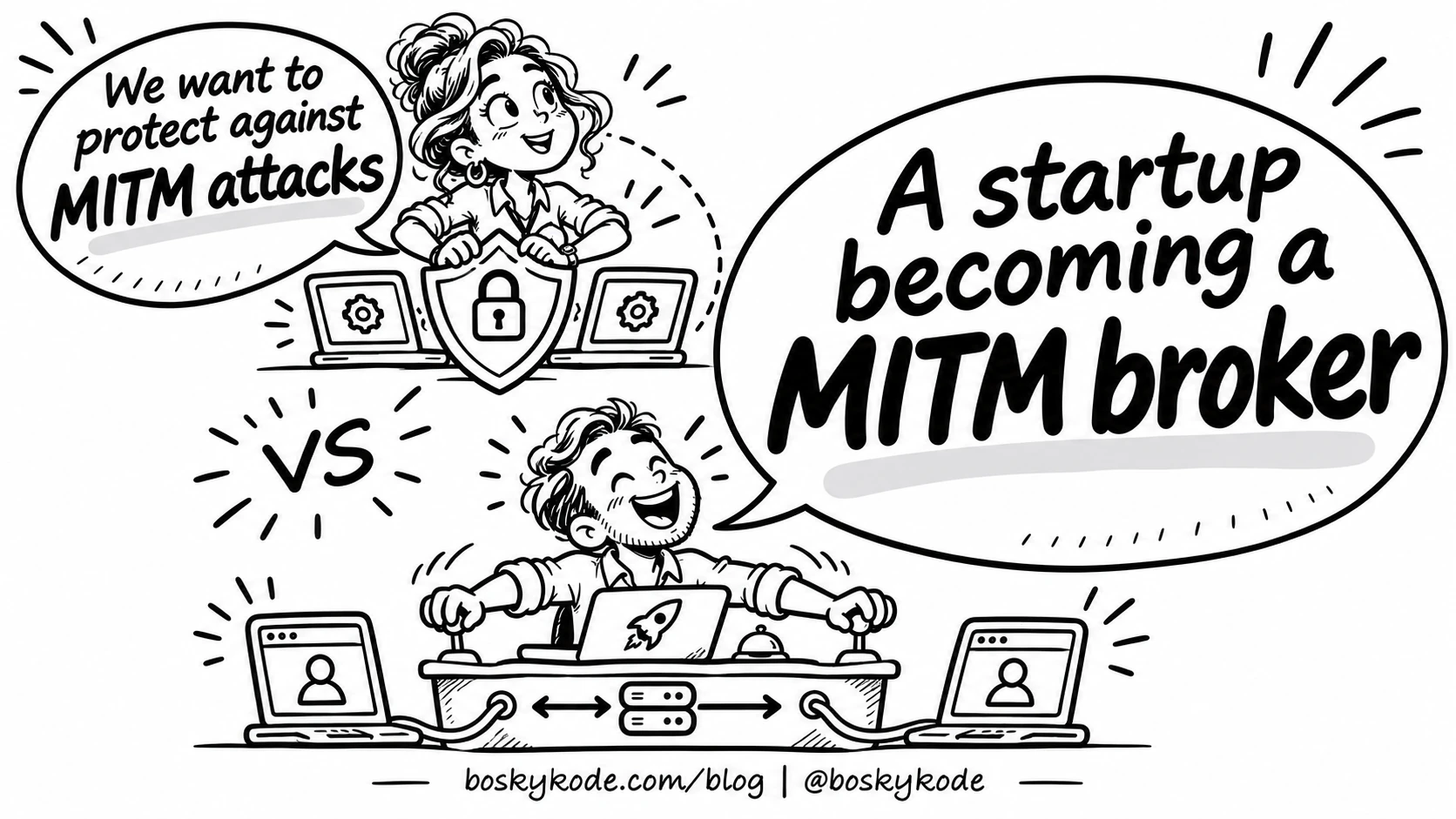
The same architectural position can look threatening in a security review and convenient in a product demo. An intermediary might reduce integration work while gaining access to sensitive traffic. The useful discussion is specific: what can it see, what can it change, and why should it be trusted? Convenience needs an explanation of the boundary it crosses.
Never share my data. Use my data to help me.
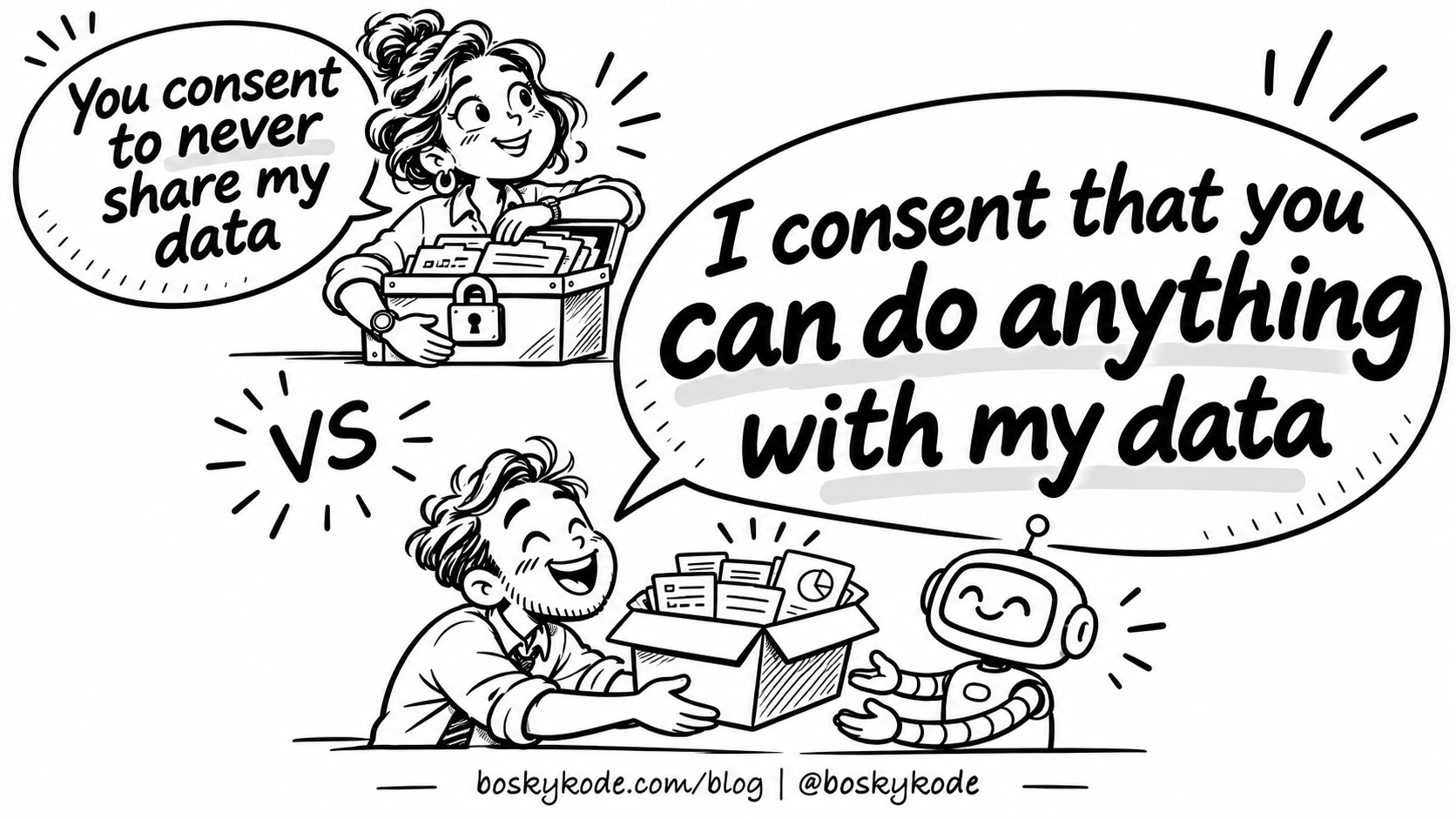
The cartoon exaggerates two ends of a negotiation. In practice, a person might permit a document to answer one question without permitting unrelated reuse. Consent needs a purpose, a scope, and a way to change course. In an AI product, asking what someone is comfortable delegating can be more revealing than asking whether they are comfortable with AI.
Secure everything. Share what matters.
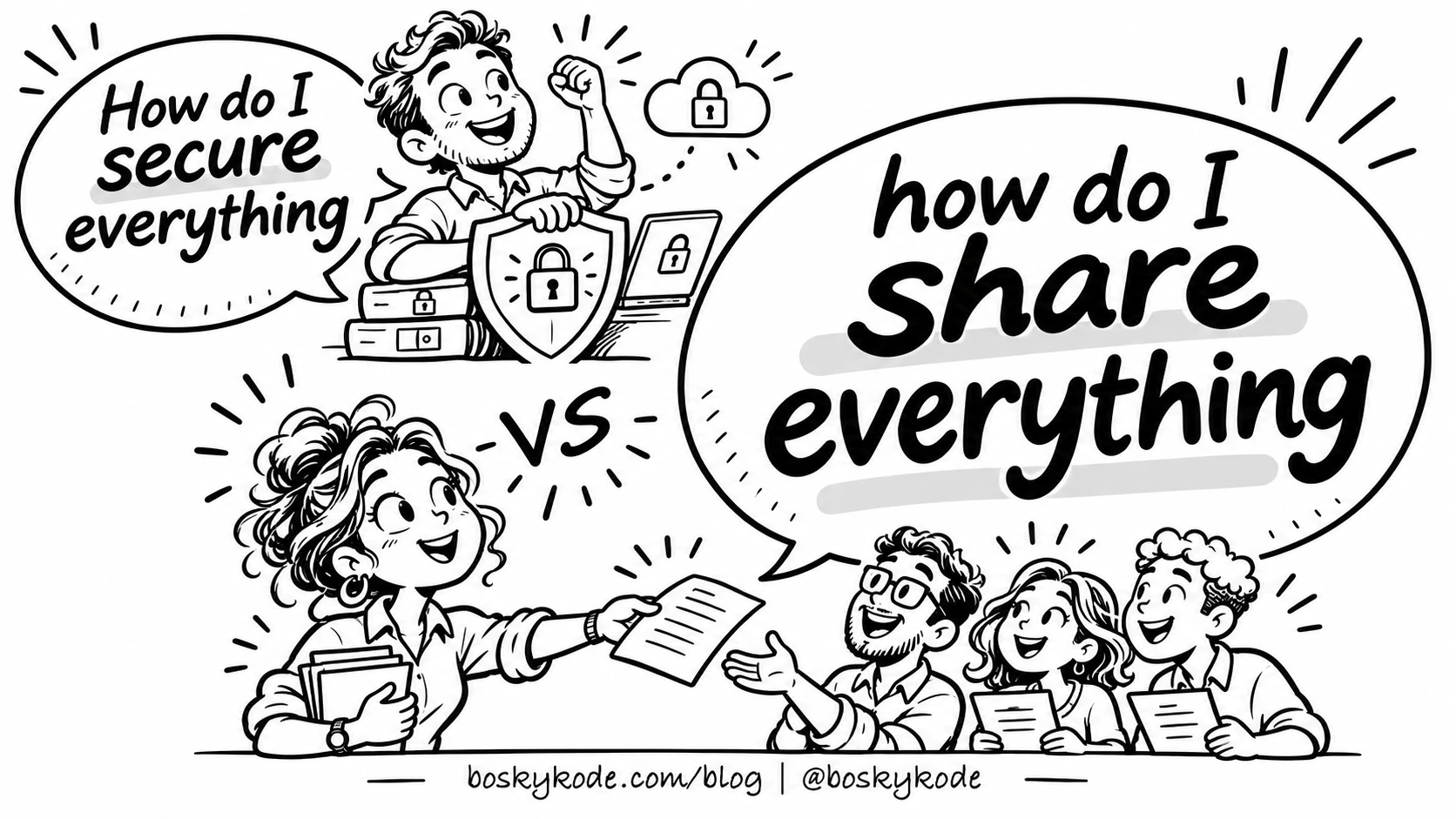
Security should help people collaborate with the right audience. A creator sharing a portfolio and a team exchanging confidential work need different boundaries, sometimes inside the same product. The design opportunity is to make the intended recipient clear and accidental exposure difficult. A global default is only useful if people can understand and adjust it.
Perspective 03
More choice can create more work
Novelty, capacity, and personalization all compete with the time it takes to make another decision.
Old is gold. The new thing might matter.
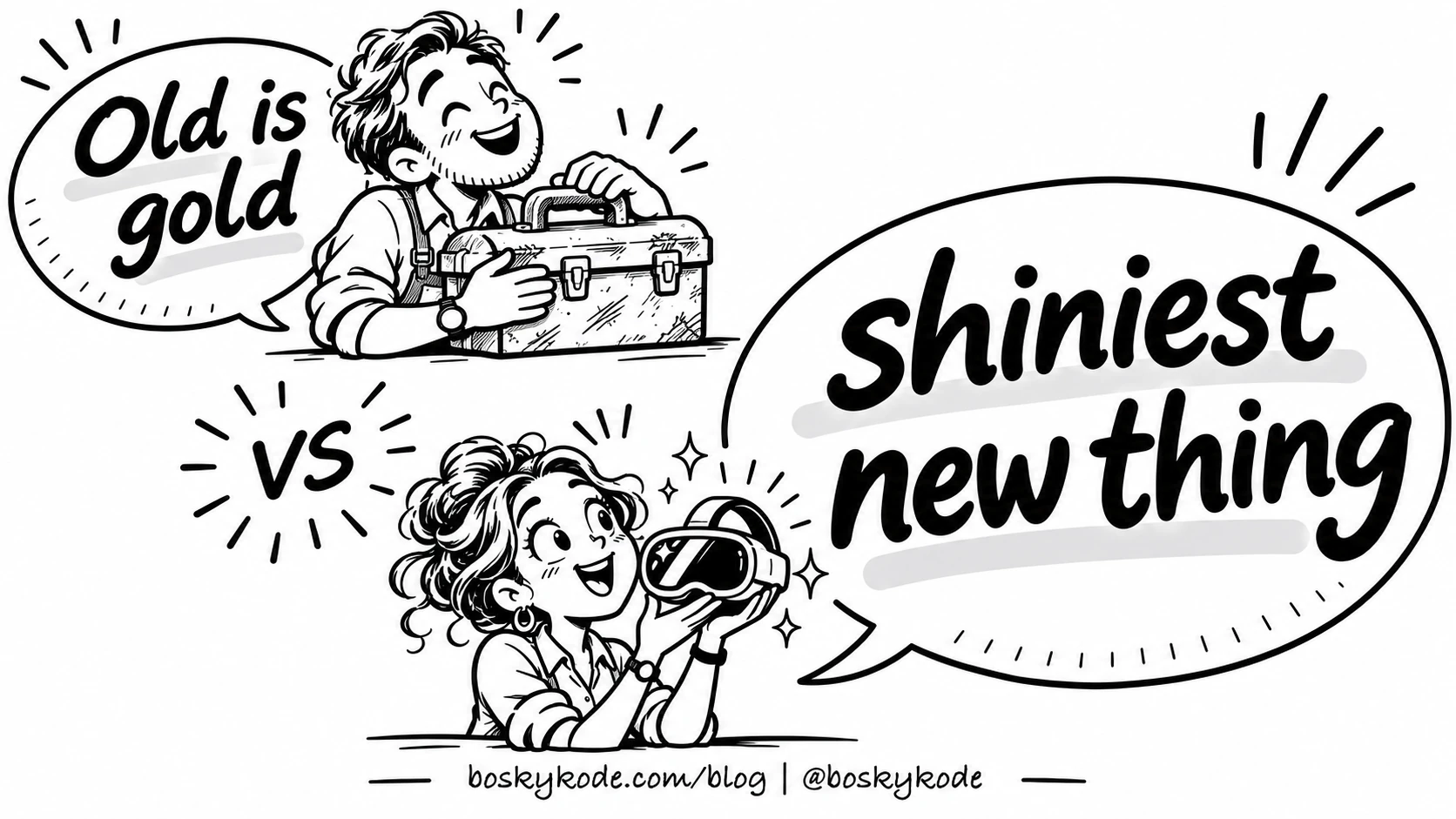
A familiar tool carries habits, trust, and work that already exists. A new one can offer a capability the old one never had. Neither familiarity nor novelty settles the decision. Ask what migration would cost, what genuinely becomes possible, and who can afford the disruption. The answers can change between teams, markets, and stages of life.
The right tool. The latest tool.
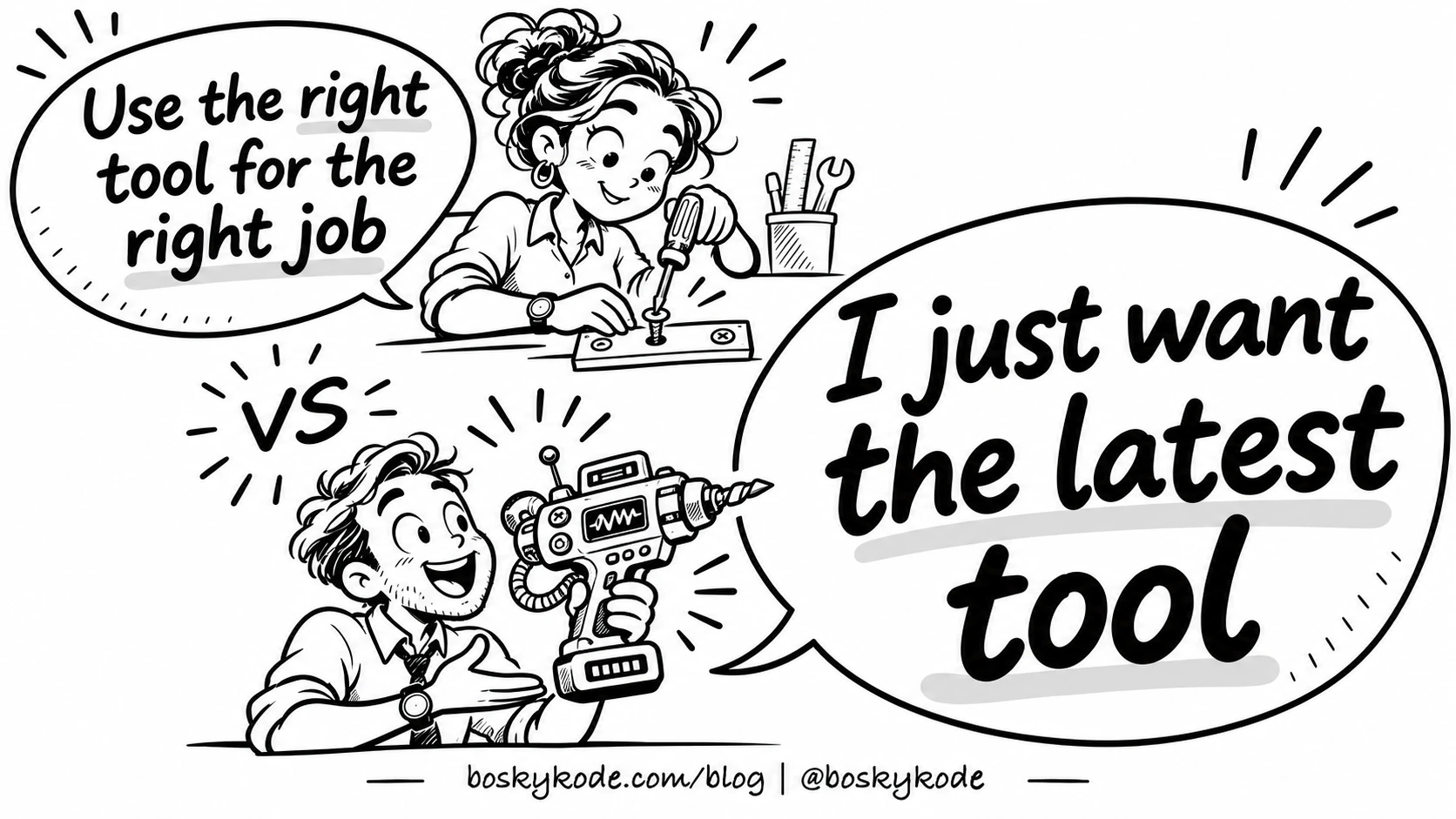
Trying a new tool can be learning, curiosity, or a real search for an advantage. It can also consume the attention it promised to save. A useful comparison starts with the task and the constraints: language, device, connectivity, budget, and experience. Looking beyond our usual product circle helps us notice which of those constraints we quietly stopped seeing.
More space. Less to keep.
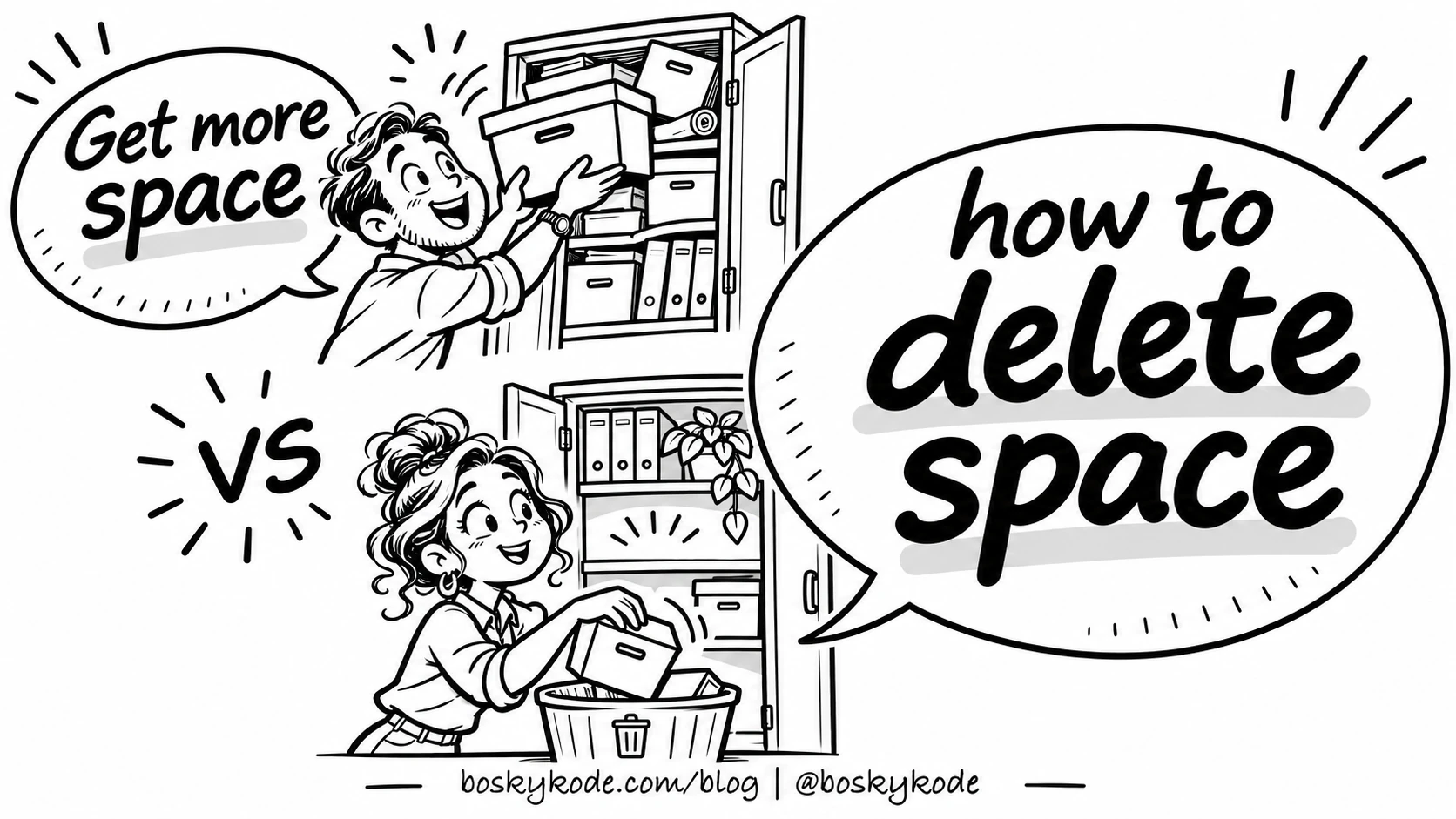
The sheet's playful phrase “delete space” points toward a familiar reversal: sometimes we need more capacity, and sometimes we need less clutter. AI can make another draft, image, or saved summary cheap to produce while leaving the review work to us. A product that helps us decide what to discard may be as valuable as one that helps us create more.
A million choices. Only what I need.
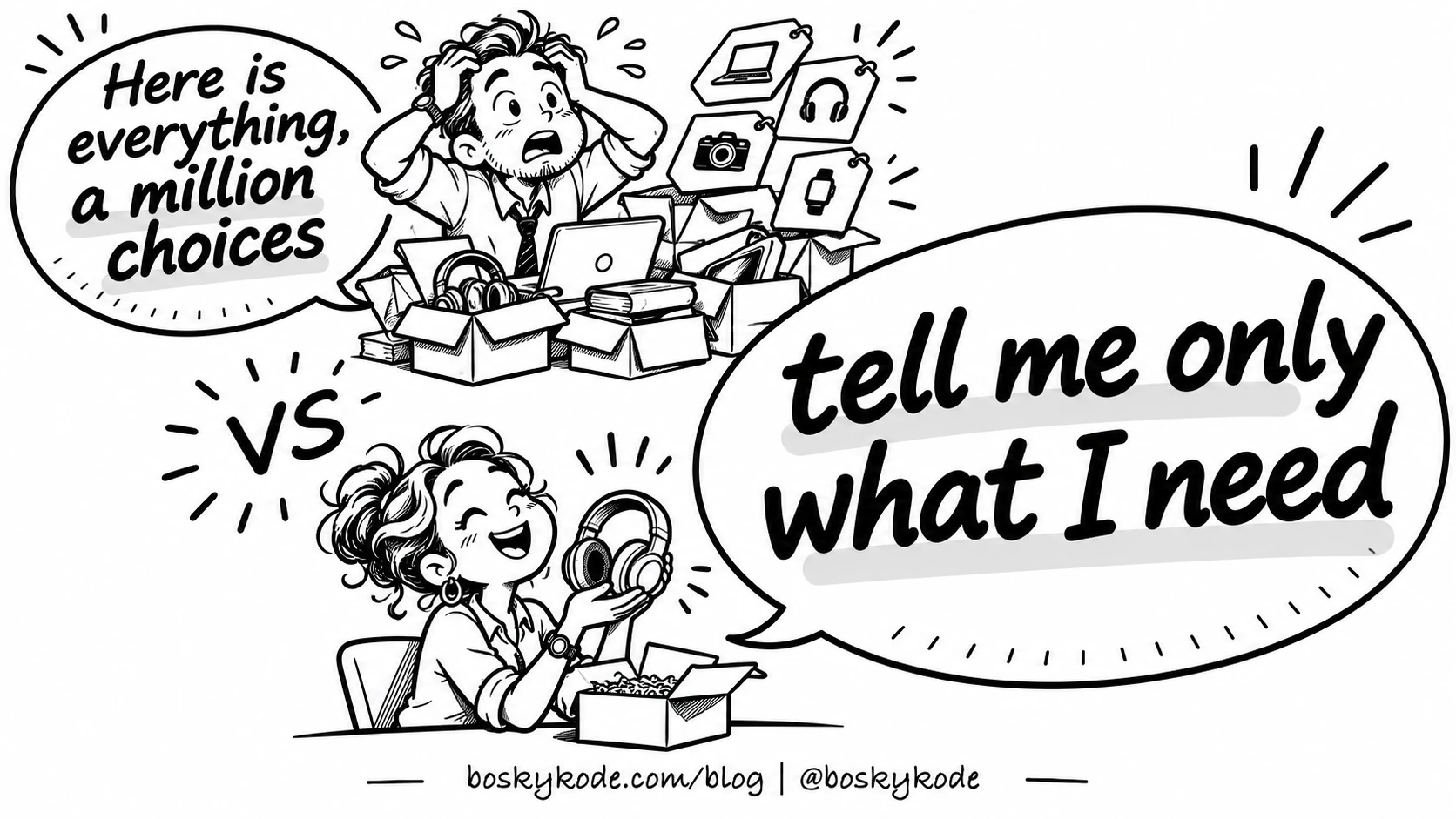
A large catalog signals possibility until choosing becomes another job. A recommendation can save time, but it also makes decisions on someone's behalf. The interesting product space sits between a blank search box and an unexplained answer: a useful suggestion, a clear reason, and an easy way to change direction. Curation should reduce effort while preserving agency.
Perspective 04
From choosing a tool to choosing what to delegate
With AI, the contrast reaches the conversation itself. How much thinking, direction, and follow-through do we want to hand over?
Do more. Work less.
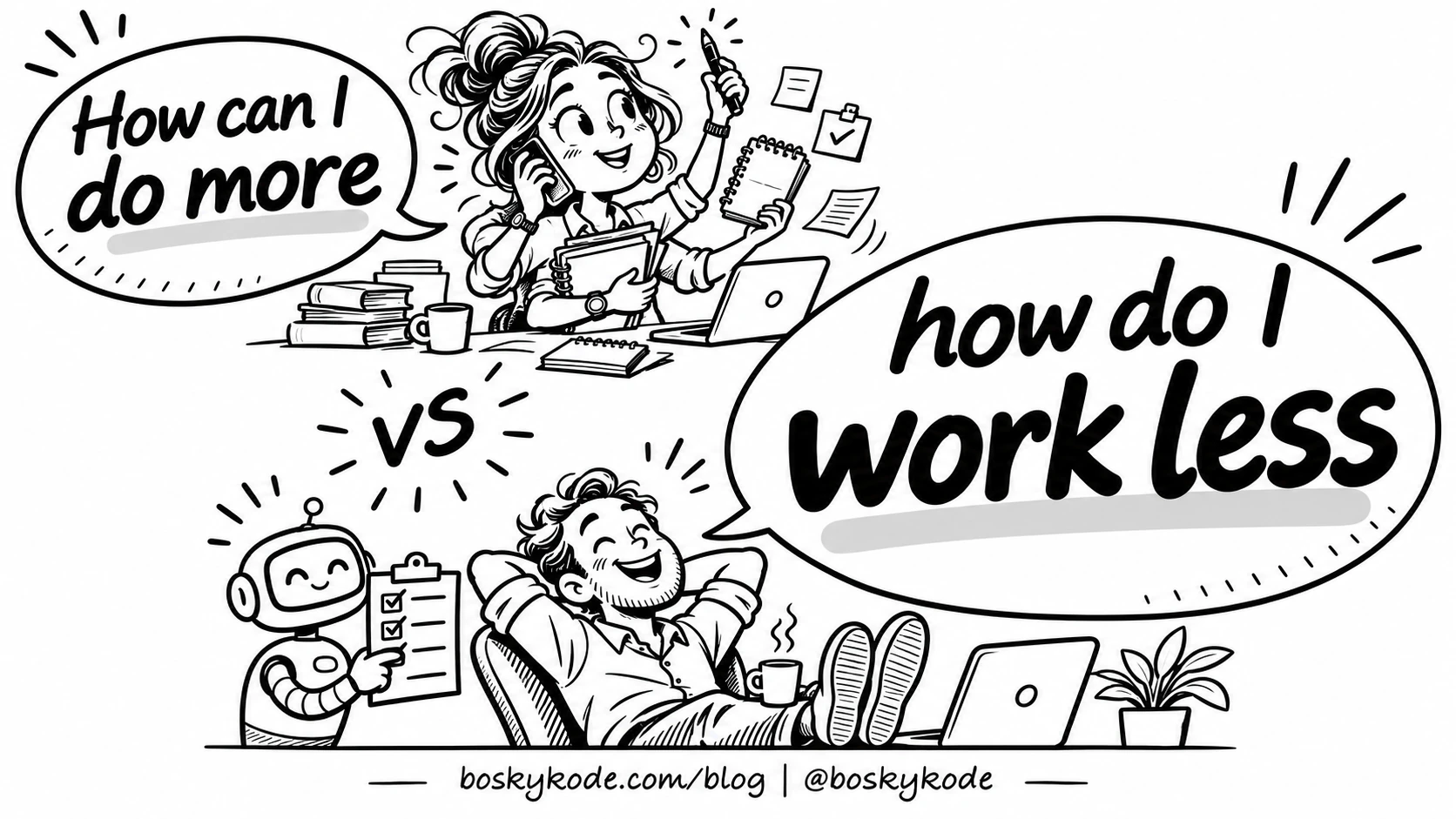
Productivity can mean a larger output or the same useful outcome with less work. AI makes that distinction worth stating before a task starts. Otherwise, every saved minute can become another proposed improvement. A good delegation brief says what matters, what is enough, and where to stop. Time returned to the person is a result too.
How do I? Tell me what to do.
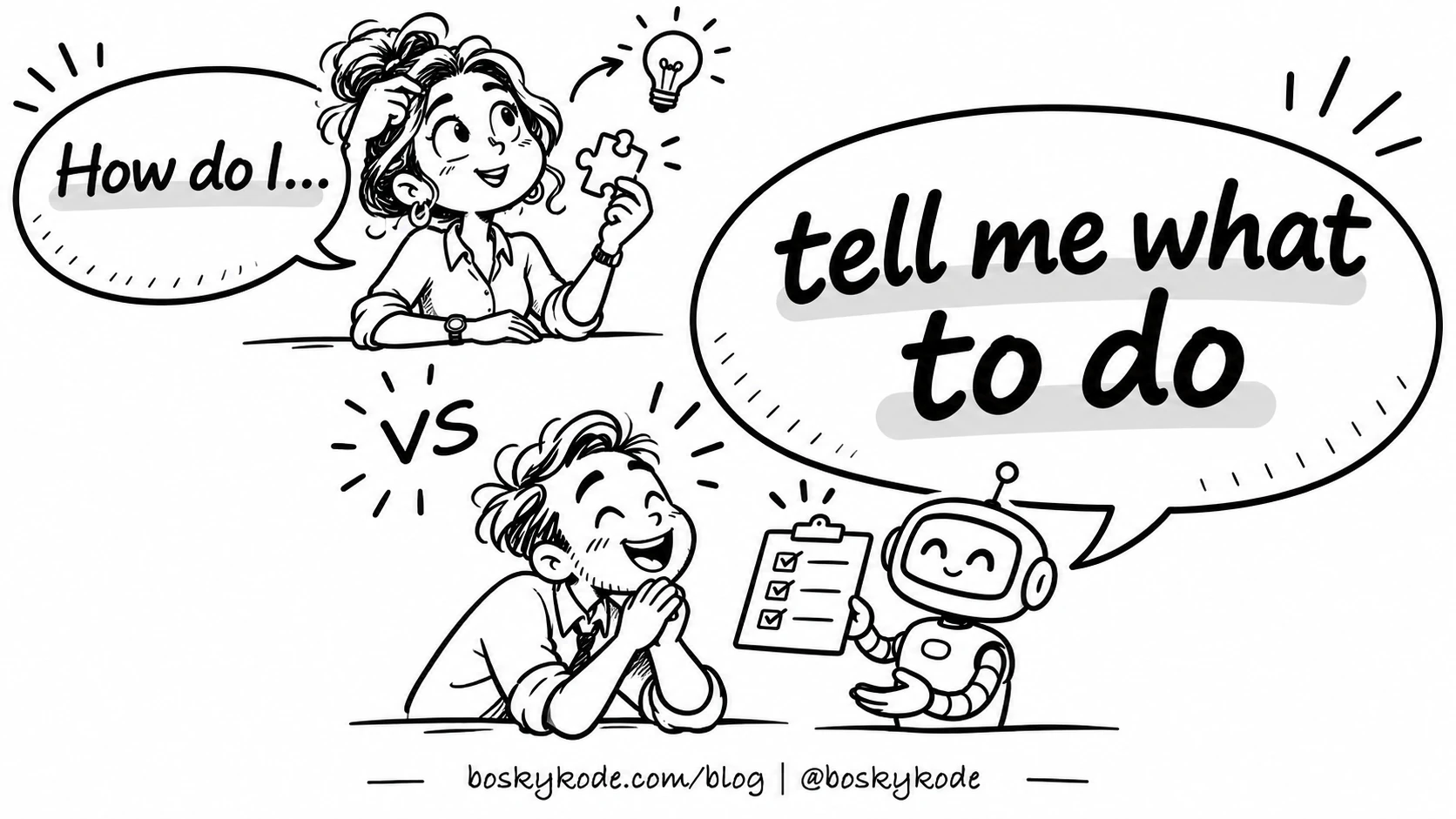
Sometimes a question is a request to understand; sometimes it is a request for a next step. The same person can want both at different moments. Prompting works better when we make that intent visible: explain the reasoning, compare the options, recommend a direction, or help me act. An assistant should leave room to change modes as the conversation develops.
Do anything. Give me a direction.
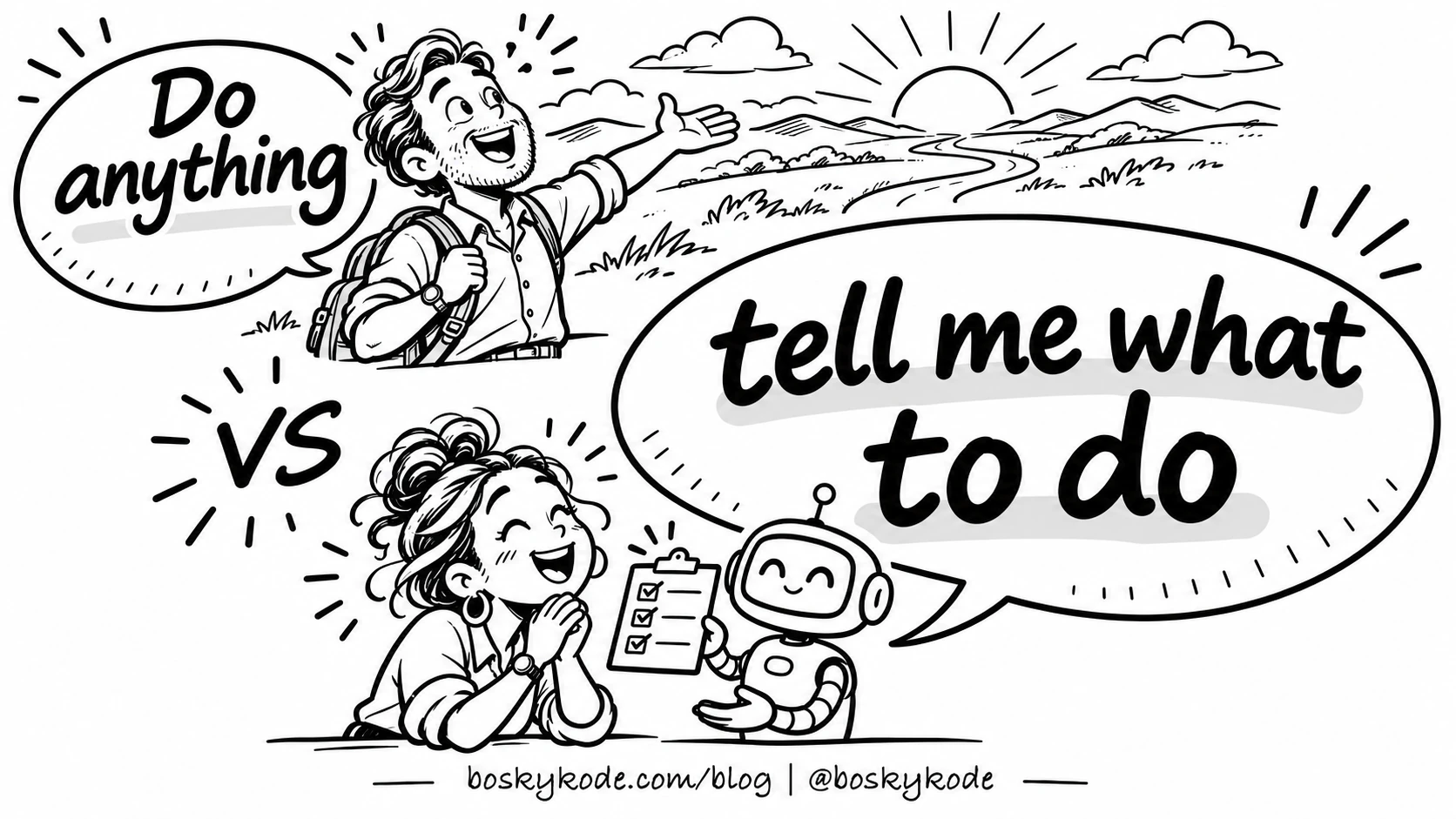
An open-ended tool offers freedom and asks us to supply the structure. A suggested next step lowers that burden, but it should still answer to the goal we chose. This is an interesting place for AI products to compete: helping people turn an intention into a bounded task, then carrying enough context forward that every follow-up does not begin from zero.
DIY. Do it for me.
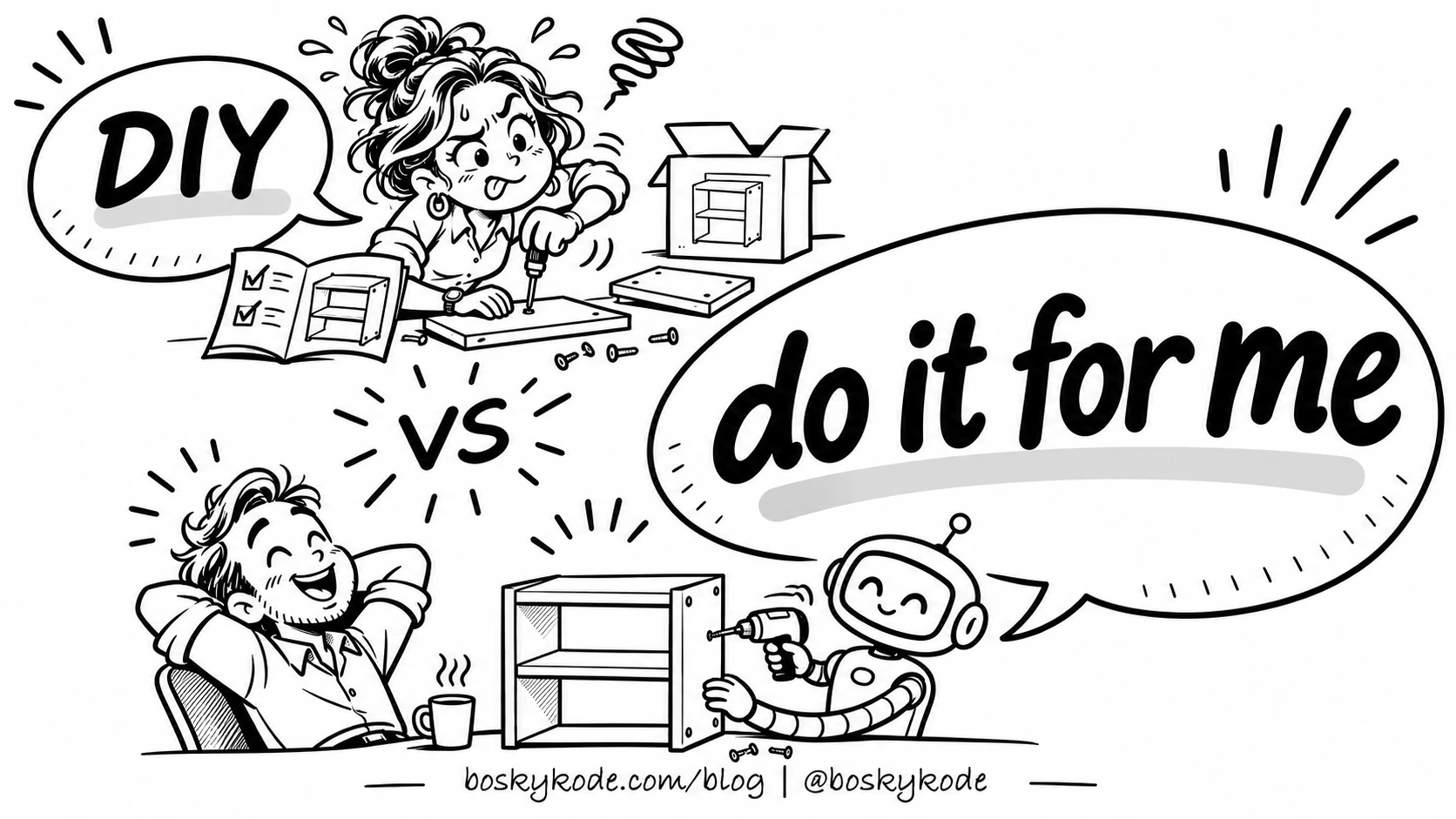
Doing something yourself can be about learning, pride, control, or simply getting it right. Delegating can be about getting an outcome without managing every intermediate step. Neither preference needs to be permanent. The opportunity is to make the handoff clear: give the goal, name the boundaries, inspect the result, and decide when to take the controls again.
The next time we review a product, we can start with the opposite of our preferred answer. Who would choose it, under what conditions, and what would we need to learn from them? For AI tools, that question reaches all the way from the first prompt to the last follow-up.
Start with a small task you can inspect. Write down what a useful result looks like and when the work should stop, then see how much of the back-and-forth you want to delegate.
Illustrations created with AI from the author's paired product prompts. These are conversation starters, not survey findings or claims about demographic groups.
